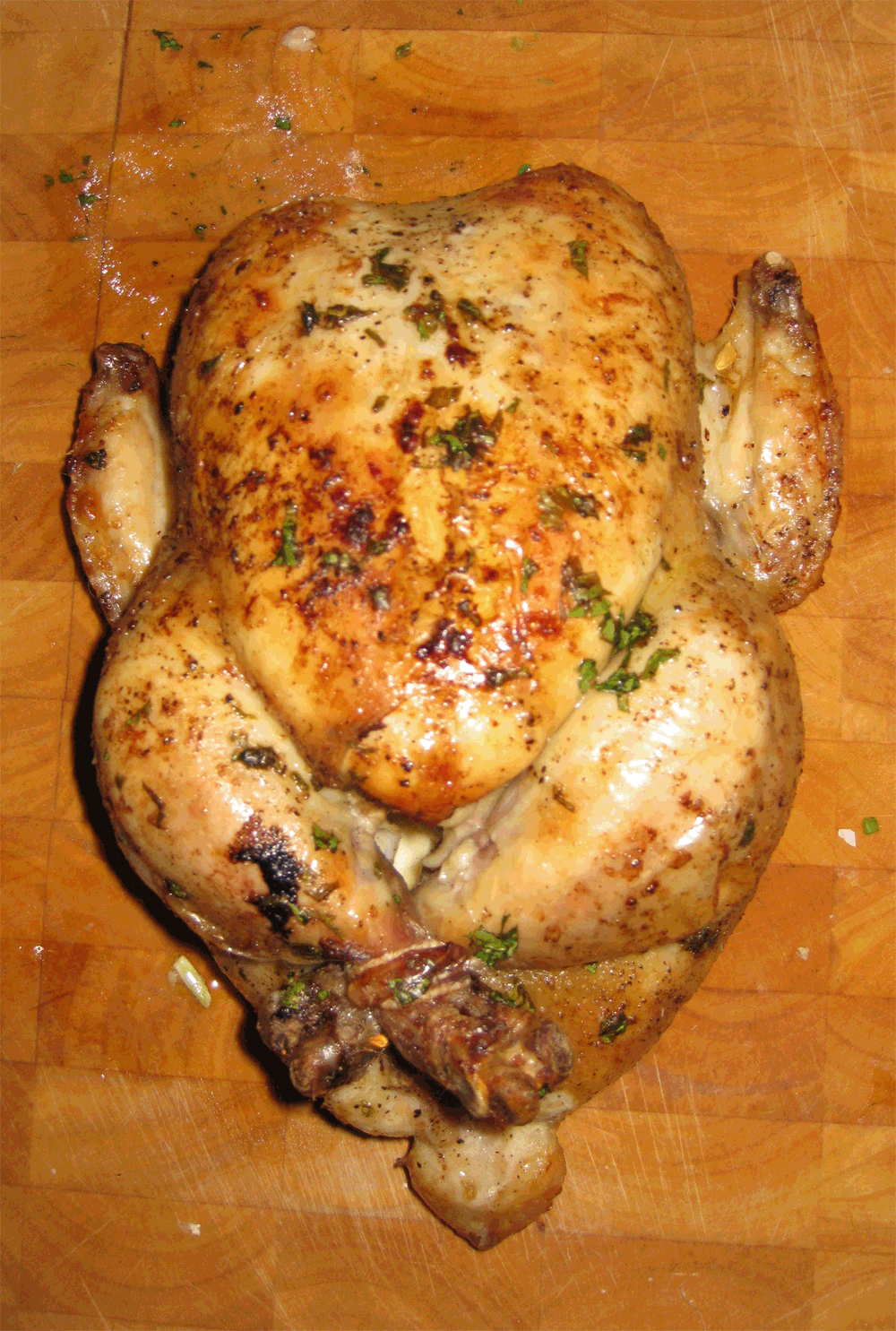
Turkey 2011

28 Dec

Another Christmas dinner has come and gone and the troops have been well fed. Seven of us arrived at my folks’ place Christmas evening and tucked right in to a cheese and pate plate while glasses of red and white wine were poured.

But before the feast could be devoured, that turkey had to get prepped & cooked!  I posted earlier my general plan for the turkey and I stuck pretty close to what I had planned out. For this recipe, you’ll need either a large cooler or a non-reactive container (a large bucket and garbage bags work, I promise) and you’ll want to start at least 24 hours ahead. I actually brined my turkey for 36.

Here’s what I got up to…

Serves 10.

Ingredients

1 11lb fresh, organic turkey
2 c hot water
2 c brown sugar
2 c kosher salt
1.5 c molasses
1 head garlic, halved
4 sprigs rosemary
2 lemons, quartered
2 onions, halved
2 oranges, quartered
1/2 c black peppercorns
enough cold water to cover the turkey

2 leeks, halved
4-5 carrots, rough chop
4-5 stalks of celery, rough chop
1 head garlic
1 orange, halved
2 sprigs rosemary
2 tb ground black pepper
2 tb butter, room temperature
4 c chicken stock

Directions

Brine

1. Take the turkey out of the fridge. Remove the neck and giblets, then rinse with cold water.
2. In a large pot, combine the hot water, salt and brown sugar. Stir until salt and sugar have dissolved and cool the mixture. (You don’t want hot water in with your turkey.)
3. When the mixture has cooled, place it in the cooler/container. Add enough cold water to cover the turkey. Then add in the molasses and stir.
4.  Toss the oranges, lemons, rosemary, peppercorns and garlic halves into the mixture.
5. Place the turkey in the brine and store in a cold place.

Cooking

1. Preheat your oven to 400F.
1. Remove the turkey from the brining solution. Rinse and pat dry.
2. In a roasting pan, place the leeks, carrots, celery and 3/4 of the garlic.
3. Place the turkey breast-side up on the bed of vegetables and smother completely with the butter. Season thoroughly with the black pepper, including in the cavity. (You won’t need salt.)
4. Place the rest of the garlic, orange halves and rosemary in the cavity of the turkey.
5. Pour 3 cups of the chicken stock into the pan, reserving the last cup for gravy  or if you need extra liquid during the cooking process.
6. Wrap a little bit of foil on the tips of the wings so they don’t burn.
7. Put the turkey in the oven and immediately turn the temperature down to 325F. Cook the turkey for 20 minutes per pound, basting every 30 minutes, until the turkey’s internal temperature reaches about 160-165. Let it rest for 20-30  minutes and enjoy!
NYT Project: Broiled Lamb Chops

19 Dec

This particular recipe wasn’t on my original list; however, I was looking for something to make with the Brussels sprouts and this seemed like a pretty simple dish. I generally try to steer clear of making two new dishes at once, but with four simple steps this looked pretty foolproof, even for me. (Though I’ve been cooking for years now, sometimes my sense of timing is a little off.) Lamb has been on my list of food that I want to attempt to cook, so clearly it was meant to be!

Serves 2.

Ingredients

2-4 lamb chops per person
extra virgin olive oil
1 garlic clove, sliced
salt and pepper
unsalted butter, optional
herbs (dill, mint), finely chopped, optional
lemon juice

Directions

1. Place the lamb chops in a dish and cover with olive oil. Add in the garlic and marinate for 30-60 minutes.
2. Turn on your broiler and position the oven rack so that it is 2 inches below the heat source.
3. Season the lamb with salt & pepper, then place on a foil-lined tray and cook for 4 minutes per side for rare. (recommended, but add extra time if you want them more on the medium-rare side.)
4.  Remove from the oven and plate. If you like, add a small pat of butter, some herbs and a squeeze of lemon juice to each chop.

This slideshow requires JavaScript.

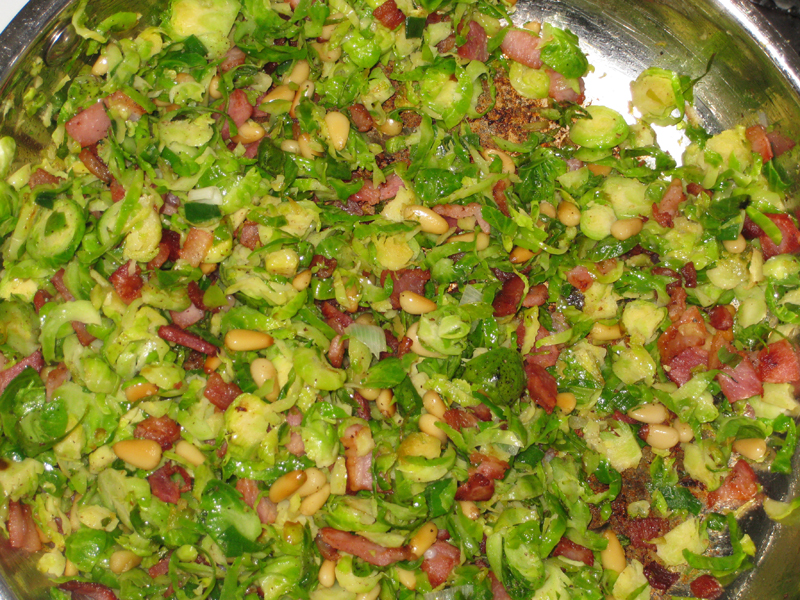
NYT Project: Shredded Brussels Sprouts w/ Bacon & Pine Nuts

19 Dec

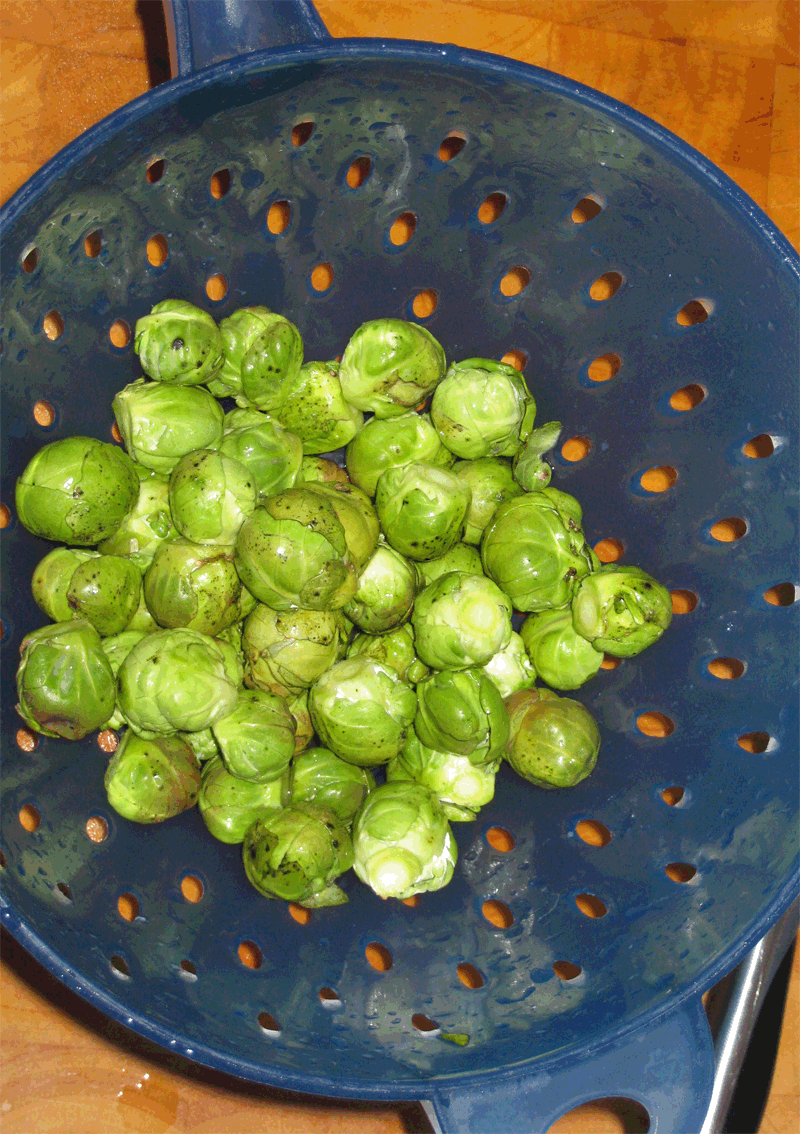
Brussels sprouts were the bane of my existence as a child. The mere mention of them would send me into fits of eye-rolling, gagging and desperate complaining with the hope of being spared from their inherent repulsiveness.  My parents would insist that they liked them and I could only assume that they were either a) blatantly lying or b) insane.

Fast forward twenty years and I find myself at the market, buying a pint of Brussels sprouts voluntarily. What has gotten in to me? It started back in the summer with reports of a friend making absolutely delectable Brussels sprouts for a group of eight or so. So the story goes, people were actually fighting (cordially…but still) over the last few sprouts. After verifying this story and hearing said people swear up and down that they were great, I began to rethink my stance. If all those people – most of whom hated Brussels sprouts as kids – liked them now, maybe it was time to give them another chance. Flipping through the NYT cookbook, I came across a recipe that looked easy and, importantly, included bacon. Bacon makes everything better, as far as I can tell.

This recipe does require you to do a few steps, but if you have a food processor, it is well worth using it! Alternatively, if you have Brussels sprouts large enough, you could shred them on a box grater. Just watch your fingers!

They look so harmless!

Serves 2.

Ingredients

1 pint Brussels sprouts
3 strips bacon, diced
1/4 c pine nuts
3 scallions, finely sliced
1/4 ts nutmeg
salt & pepper

Directions

1. Trim the Brussels sprouts. If you have time/desire to, you can core them as well but it’s not necessary. In batches, shred in the food processor.
2.  Fry the diced bacon until crispy, roughly 10 minutes. When cooked, remove the bacon and drain on paper towels.
3.  Add the pine nuts to the pan with the bacon fat and cook over a medium-low heat until the pine nuts have turned a light brown. (2-3 minutes.)
4. Add the sprouts, scallions and nutmeg. Cook until the sprouts are done, roughly 6-8 minutes. They should be bright green.
5. Stir in the bacon pieces and season with plenty of salt and pepper. (Make sure you taste, though, as the bacon is salty, too.)

Looks great, tastes better.

Who Wants to be Famous?

12 Dec

A break from food for a moment, if you’ll indulge me!

Most of us have seen the “Eric” and “Erica” commercials that Kijiji runs, right? Well, they’re looking for the new Eric to be a part of the next commercial that will be shot in January! So send some creative submissions to kijijimarketing@kijiji.ca and get yo’self famous!

Have a look at the rules and such here!

Wanna be famous like him??


Christmas Turkey Plans

12 Dec

It’s about that time of year when I start plotting how I’m going to cook the Christmas turkey. I’ve taken on turkey-cooking for the last few Thanksgivings and this will be Christmas turkey number two. (Last year J & I hosted Christmas for the first time. Fun but exhausting, I’m glad the duties are being split up among guests this year. Even happier that I won’t have to do any dishes.) I’ve been keeping an eye on different brines and recipes and I think I’ve come up with the one I want to use:

2 c salt
2 c brown sugar
1 c molasses
2 lemons, quartered
2 oranges, quartered
1 bunch of rosemary
2 onions, halved
1 head garlic, halved
1/4 c peppercorns

The plan is to dissolve the salt & sugar in hot water in a large cooler, then add the rest of the ingredients. Top that off with enough cold water to cover the turkey and leave the whole concoction alone for a solid 24 hours, maybe longer. Will then stuff the birdie with garlic, rosemary, lemons & oranges and roast on a bed of celery, carrots and leeks. I have chicken stock in the freezer that will go in the bottom of the roasting pan, too, which should help make for some delicious gravy! (Actual gravy prep is Dad’s job. He still makes it the best. I always end up with lumps in mine because I’m impatient.)

Thoughts, anyone? Anyone have an amazing turkey recipe they’d like to share?

Dishcrawling on King St. West

2 Dec

I heard about Dishcrawl via Twitter a few months ago and it sounded like a fun concept: tour and sample dishes from different restaurants in specific neighbourhoods with like-minded foodies. The catch? You don’t know the restaurants until you arrive at the meet-up spot! Throw caution and control to the wind, show up where you’re told and try some new things.

My girlfriend and I anxiously awaited the email telling us where to head for our first destination, having bought our tickets weeks in advance. The day arrived and we went down to Thor Espresso Bar (35 Bathurst St.) where fifty other Dishcrawlers had gathered. Co-owners Patrick and Tom provided espressos and americanos to everyone there, a welcoming sight on a very cold evening. The guys use a mix of beans from South and Central America and they make for a wonderful, rich drink. They also feature some lunch options and snacks like the incredibly sinful looking donuts. One of the Dishcrawlers couldn’t help but buy one for the road and I can’t say I blamed her.

mmmmmm...donuts.

Thor boys contemplating their Slayer machine

When we had all gathered, Gretchen (half of the fabulous Dishcrawl team), led our group to Wabora, a swank Japanese restaurant located at the Thompson Hotel (550 Wellington St. West). We were seated in front of the very busy sushi chefs and were greeted by Wabora’s charming manager who explained what we would be eating that evening. He was quick to point out that Wabora was not strictly sushi restaurant, but also featured a hot kitchen to provide a delicious meal to satisfy any taste. Plates of crispy fried chicken pieces smothered in a sweet and spicy sauce arrived at the tables moments after and were quickly devoured by the hungry guests. Next up were the fresh salmon and dynamite rolls from the sushi kitchen. I thought the sushi was great: the fish and crab were fresh and the dynamite roll was spicy and had lots of crunch. My girlfriend and I agreed, though, that there was too much mayo for what was served, but that’s a matter of personal taste. Finally, an unexpected dessert course came to our table: four spoons with ice cream and deep-fried, chocolate-filled cigar cookies. Our table went silent except for the occasional, quiet, “Oh my god” followed groans of culinary happiness.

Sushi at Wabora

Crispy chicken at Wabora

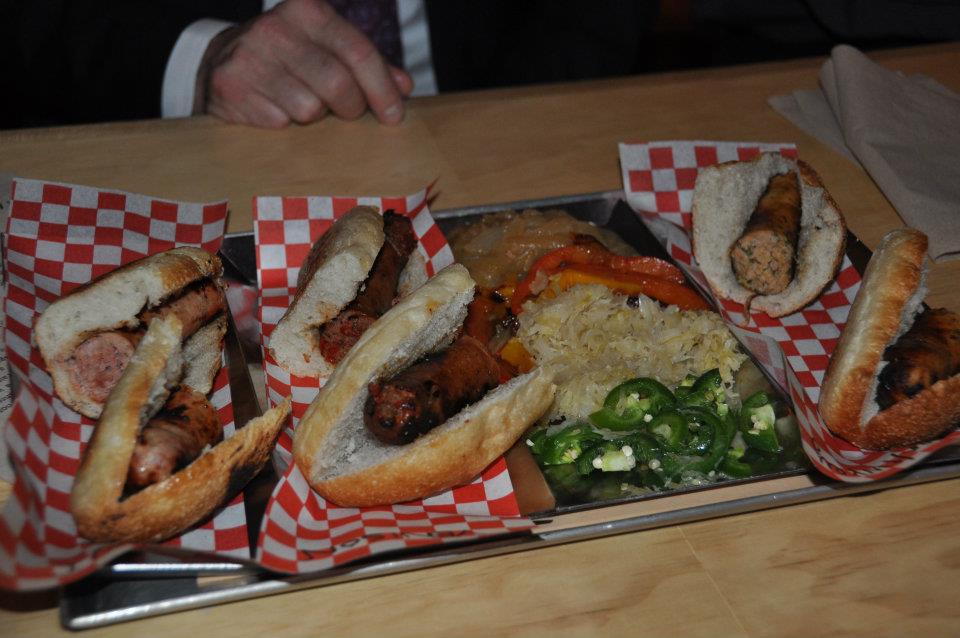
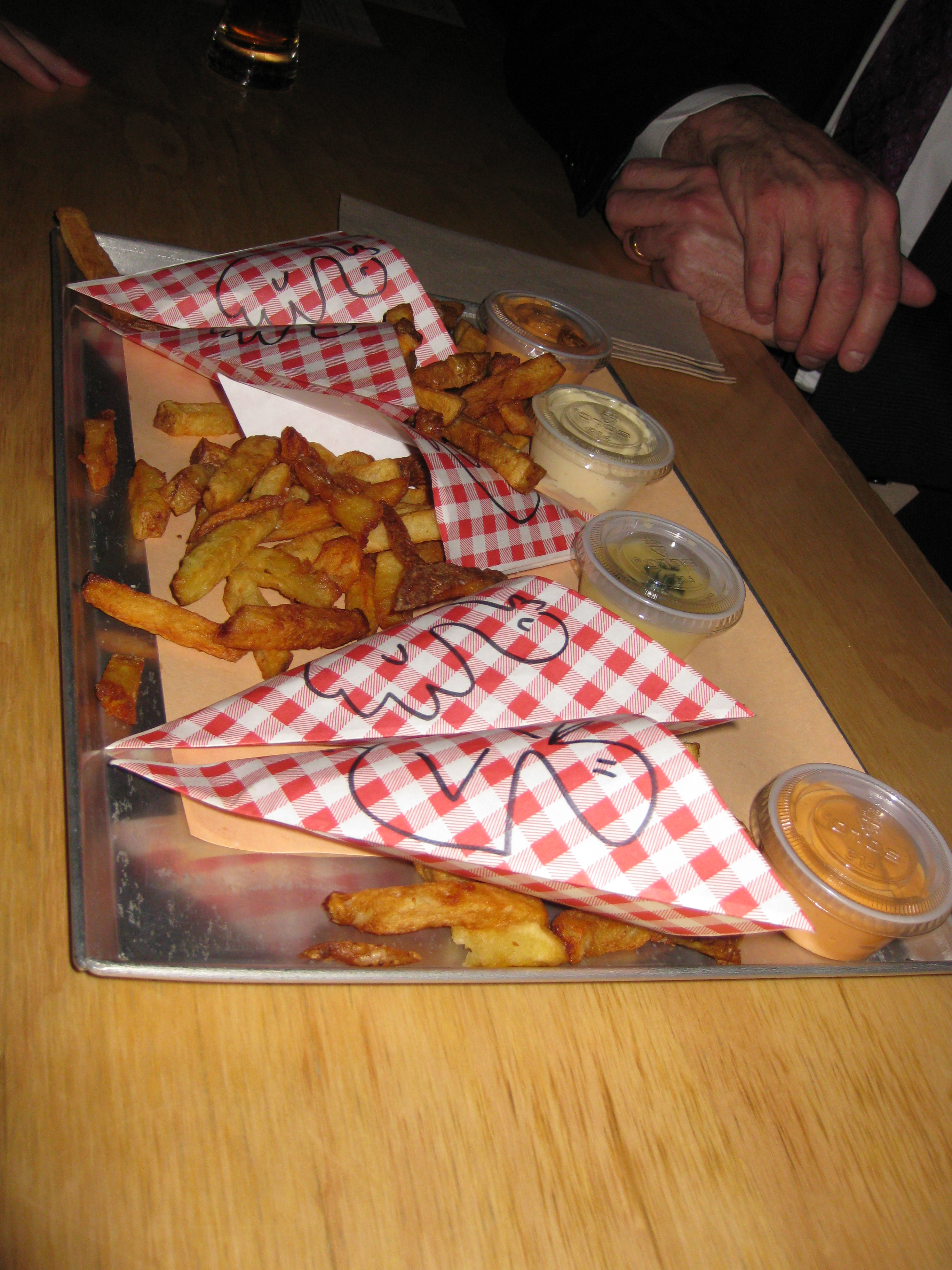
So where does one go after Japanese food? Why, a German sausage hall, of course! Wvrst opened this past summer and has been on my hit list since (609 King St. West). Featuring everything from pork to elk to kangaroo sausages and duck fat fries, this place is an original in Toronto.  Great, relaxed vibe, friendly staff and an excellent variety of beers on tap – it’s no wonder this place was an instant hit. It’s no frills food, attitude and atmosphere and I can’t wait to try it again. We were told that it was much busier in the restaurant than they’d expected, so the service was delayed longer than we’d anticipated. No one seemed to mind too much, though, as friends old and new chatted away happily over pints. The fries arrived first in paper cones with ducks drawn on the front, served with several dipping sauces. Not too long after, rounds of rabbit and beef sausages with sides of jalapenos, sauerkraut, red peppers and onions started showing up at the table. I opted for the rabbit sausage and was not disappointed. In fact, I will likely have that again in addition to the kangaroo which I’m told is fantastic.

Wvrst sausage platter

Duck fat fries

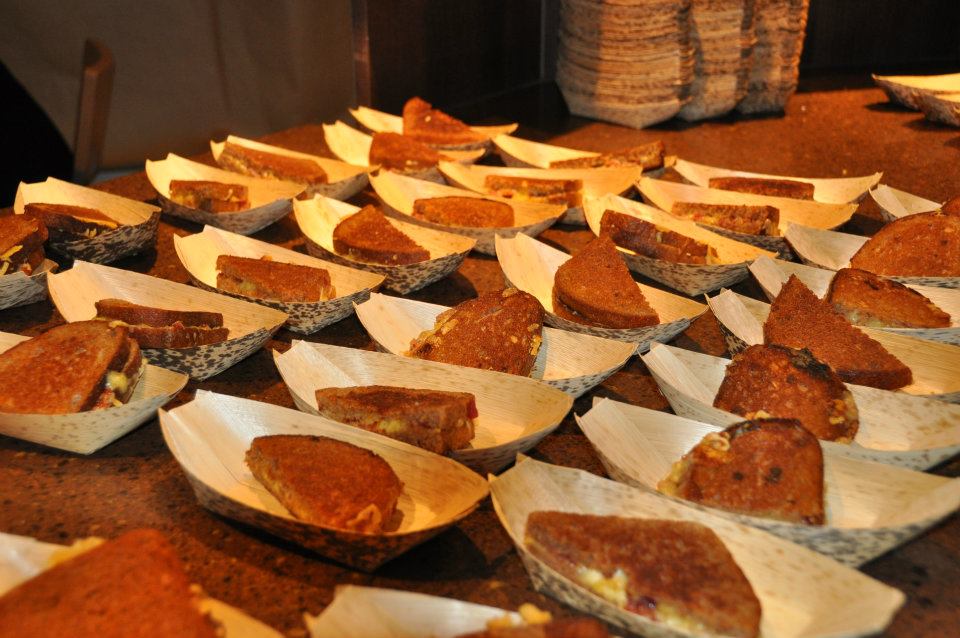
Sushi and sausage cravings filled, it was back down Bathurst to get a sneak preview of Cheesewerks (56 Bathurst St.), an artisan grilled cheese shop scheduled to open in a couple of weeks. A funky little joint making great grilled cheese sandwiches and homemade soups, the owners have clearly put a lot of thought and hard work into their venture. I was particularly excited to see that they had Red Fife wheat bread on their menu! The menu is exclusively cheese-based and they have thought out potential dietary restriction issues by providing cow, sheep and goat cheese as well as gluten-free bread. When we reported back to a friend that these options would be available, she was so thrilled! She hadn’t allowed herself to get excited about the place but is now very much looking forward to checking it out.

Cheesewerks in action

To wrap up the night, we got adorable little packages of cookies from Wagamama (766 King St. West) to take home. (The shop was long-closed before we could get there.) Tasty, homemade cookies were an excellent way to end a night full of delicious food!

As for Dishcrawl itself, I think it’s a fabulous idea that only has room to grow. I might suggest that they take smaller groups in the future if only to alleviate the crush on the kitchens. Wvrst was unexpectedly busy the night we went (likely due to the Leafs game on TV) and that put both groups behind on time. When we’d reached our final destination, you could feel some of the energy from the beginning of the night start to wane. Having said that, I think it’s a fun way to check out restaurants in an area of town you might not frequent that often and meet some new, like-minded people. I’ll definitely keep it on my radar.

Book Review: Just Food

30 Nov

“What is food to one man may be fierce poison to others.”  – Lucretius

In discussing genetically modified (GM) food, most people’s views fall into one of two groups: categorically for or against. Rarely do you find shades of grey in this debate. It’s not hard to see why when you hear stories of animals being injected with antibiotics and farmers being forced to use government-issued seeds that have been modified so that they will not reproduce at the end of the season. In the last ten years or so, a locavore movement has risen, preaching the concept that people should only eat food that is grown locally.  The idea is to visit farmer’s markets to purchase local and seasonal food, thereby eliminating reliance on Big Agribusiness and reduce pollution created via “food miles” – the distance your food traveled to get to the store.

Just Food: Where Locavores Get it Wrong and How We Can Truly Eat Responsibly by James E. McWilliams takes issue with the “food miles” theory. He speculates that food  miles are not the biggest issue with our current *gastronomical* methods but that there are myriad other factors that must be taken into account if we are to save our planet from ourselves. He raises excellent points, namely that the transportation of food products accounts for a percentage of food-related pollution, but not all of it. Other factors must be taken into consideration, like the energy needed to raise the product, feed it, the energy used to harvest it and, of course, to cook it once you’ve brought it home.

McWilliams also brings up a valid point that is often overlooked but is of tantamount importance: the world’s population is increasing at an astronomical rate and if we continue to grow, purchase and prepare food the way we do currently, we will have no way to feed the projected 8 billion people expected by 2025.  Without question, a locavore movement is not practical: how are people in drought-plagued nations supposed to live without food being brought to them from other countries? He states that, “…if poor countries do not develop the resources and infrastructures to mass-produce their own food and a surplus to trade, the developed world will have to donate that food to them…now is not the time to retreat into locavore isolationism.”

Just Food provides a counterpoint to the locavore argument. Without condemning the movement entirely, McWilliams seeks to point out flaws that are often glossed over by the media and to postulates his own theories for the betterment of  society’s relationship with food and its origins . For those who are serious about food issues, environmentalism and the future of food sustainability, I definitely recommend giving this book a read. While I don’t necessarily agree with all of McWilliams’ arguments, I think it’s important that books like Just Food are written. The topics tackled therein are not black and white but rather many shades of grey and they need to be brought to light.

NYT Project: Elizabeth Frink’s Roast Lemon Chicken

28 Nov

With so many ways to roast up a chicken, sometimes I find it a little overwhelming to choose one. Fortunately, the NYT Cookbook had a recipe that looked both delicious and simple. I think I may have used a bit too much salt in seasoning the bird, as the pan juices, when reduced, were overly sodium-ized. (Sure…that’s a word.) I tend to err on the side of using more seasoning than less as I’m disappointed when bland food arrives at the table. However, because flavours intensify when you reduce them, the salt flavour increased in the pan juices and even after cutting them with more water, I still couldn’t use them. Ah well – next time!

The bird itself, though, was fantastic. The vibrant lemon flavour came through and the meat was tender and juicy. I used cilantro instead of parsley, as that’s what I happened to have in the fridge and what I prefer to use in general. Either parsley or cilantro work well with chicken, lemon and garlic, so feel free to use either. I predict this recipe will be rotated in to my regular rotation!

Ingredients

1 3lb chicken
1/2 ts salt
1/4 ts black pepper
2 lemons
6 cloves garlic
2 tb unsalted butter
2 tb olive oil
1 tb flat leaf parsley, coarsely chopped, plus extra for garnish

Directions

1. Preheat your oven to 325F.
2. Place the chicken in a large baking dish and season inside and out with salt and pepper.
3. Remove the skin from one lemon with a peeler and rub the skin over the outside  of the chicken. Quarter the rest of the lemon and squeeze over the chicken. Place the lemon pieces and garlic cloves inside the bird.
4. Melt the butter with the olive oil in a small pan. Pour about one-third of the mixture inside the chicken.  Tie the legs together with kitchen string and pour the remaining mixture over the chicken.
5. Roast the chicken for 90 minutes or until a meat thermometer reads 165F, basting every 15 minutes with the juices from the pan. Half an hour before the bird is done, pour juice from the second lemon over it and sprinkle with parsley.
6. When done, transfer the chicken to a cutting board and let it sit for 15 minutes. Meanwhile, pour 1/2c water/broth into the roasting pan and place it over high heat. As it comes to a boil, scrape up the pan drippings with a wooden spoon. Reduce the juices to the desired consistency and season to taste with salt and pepper.
7. Carve the chicken and serve the sauce on the side.

*side note – the leftovers make for excellent chicken sandwiches – assuming you’ve got any chicken left!

Taking on the (NY)Times

25 Nov

A few months ago a friend mentioned to me that she’d picked up a fantastic new cookbook and thought that I’d get a kick out of it. It’s very difficult for me NOT to buy cookbooks, so when one is recommended I’m probably going to get it. In this case, the book is The Essential New York Times Cookbook: Classic Recipes for a New Century and it is a doozy. Over 900 pages long, it is a compilation of the best recipes published in the history of the NYT newspaper. Each recipe features a short,  entertaining and enlightening blurb about its history, the cook who created it and why it was chosen over other possible submissions.

I have now gone through many of the hundreds and hundreds of recipes and have chosen a few that I want to tackle up front:

  • lemon chicken
  • shredded Brussels sprouts with bacon & pine nuts
  • roasted cauliflower
  • arctic char with ancho-shallot butter
  • steamed fish with thyme and tomato vinaigrette
  • sauteed cod with potatoes in chorizo mussel broth
  • salmon cakes with yogurt chipotle sauce
  • Thai beef noodle salad
  • herb-crusted broiled lamb chops
  • marinated flank steak with Asian slaw
  • Malaysian-inspired pork stew
  • cucumber, tomato and avocado soup

…and that’s just to start.  First on the list will be the lemon chicken. I’m already very comfortable with roasting a bird and have been looking for a new recipe, so lemon chicken it is! I will be posting each recipe to see if it lived up to expectations. If anyone else out there has the book, has tried a recipe and liked it (or otherwise), let me know!

Gourmet Food & Wine Show

22 Nov

When offered the chance to check out the VIP night before the big launch of this year’s Gourmet Food & Wine Expo, I leapt. I’ve been meaning to check out the show for years but  schedule conflicts always kept me away. A ticket to the VIP night landed in my lap this year, so I made sure not to eat too much during the day and off I went.

Wandering through the Food & Wine Expo at the Metro Convention Centre is a bit overwhelming, but also kind of exciting. Rows upon rows of vendors unfold in front of and around you while the faint clink of wine glasses can be heard over boisterous conversations. We were encouraged to grab a sampling glass, buy a set of sampling tickets and taste whatever our hearts desired. My new friend, Steven from Little Birdie Media, and I did as we were told, opting to sit in on the Wines of Chile demonstration at 6:30. Five small glasses were waiting for us, all with different Chilean wines ranging from chardonnay to malbec. While the sommelier leading the discussion may not have been overly enthusiastic, the audience appeared to be engaged and interested.

Of all the wineries we tried, it was agreed that Barefoot Wine & Bubbly had not only excellent wine but a great pitch, too. I love a company that can not only produce a good product (seconds on the bubbly pinot grigio? Yes, please.) but that has a philanthropic business plan. Check out their link above and seek out their product. You won’t regret it.

My second favourite alcoholic drink of the night has to go to the Affligem Trippel beer. Having tried the Blond before, the lovely gentlman pouring out samples talked me into the Trippel, a rich, amber-coloured beer that had bittersweet notes, this is surely something I will be seeking out again. I’m fairly certain you can find at it at beerbistro, but then…what beer CAN’T you get at beerbistro?

I was very happy to see that the folks from Ontario Goat Cheese were there (I went a little insane over their triple cream goat cheese brie at the Delicious Food Show). I suggested that Steven try the brie I’d had last month and I went with the goat cheese coated in tart cranberries. Heav-en. And as if that weren’t rich enough, we next headed over to the Food Network Stage for a demonstration in chocolate making from the makers of Baci chocolates. Best freebie of the night, without question.

Post-dairy deliciousness, we checked out the other booths that were promoting such vastly different products as coffee to chocolate to vacation packages. After sampling several more wines and the like, the smell of meat on the grill lured us to Embrujo Flamenco. The smell of chorizo wafted through the air like a smoky, spicy siren song: we knew we were done for. Simple and tasty and that’s all it needed to be. The sandwiches were especially great to sop up the booze we’d been trying out for the last several hours…

Is it safe to say that the Gourmet Wine & Food Expo was a success? Well, I understand that they’ll be moving the larger hall next year so…yes. I have to admit that I enjoyed the Delicious Food Show a little more, but my expectations may have been unfairly high. Certainly not a bad time and the show does offer a wide selection that is sure to please. Where else can you get sturgeon caviar, Dead Elephant Ale and see Chuck Hughes cook in the same place?